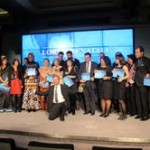
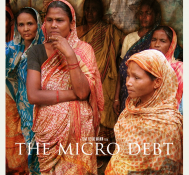
Tom Heinemann awarded as best critical journalist by the Timbukto Foundation

Tom Heinemann awarded the price of 13.500 € for critical journalism on developing countries.

Tom Heinemann

The Jury’s justification for the choice of Tom Heinemann as a recipient of the Timbuktu Fund price for critically journalism on developing countries:
Tom Heinemann has for many years worked with radio and television documentaries as his primary journalistic platform, but in a form and with a content which has enabled him to dominate the developing country information and journalism for many media platforms, primarily in Denmark but also in several other countries.
These programs have had an impact, which often made their content to news materials in both print and electronic media.
His features are well-researched, information-saturated and critical radio and television documentaries focusing on issues that show the close interaction between our world, trade and consumption and the production and working conditions conducive to human conditions in some developing countries.
The 3 TV documentaries: “A Killer Bargain”, “A Tower of Promises” and “The Bitter Taste of Tea” have all documented the exploitation of people and unpleasant contexts in economics, production and consumption between rich and poor countries, and they have done so in a way that has caused debate and media interest beyond the particular developing country interested audience.
The programs which are an extension of an even more extensive production of radio documentaries, including Tom Heinemann’s “Tøjslaverne from Burma” (“The Real Slaves of Fashion from Burma) from 2003 is the best known.
The debate has taken place both in the popular media and various organizations, and its impact has been great. Large companies have had to apologize and assert that they would change their policy.
Critical journalism requires diligence.
The critical programs challenges and insult strong players with plenty of access to expensive lawyers. Therefore, the requirements for precision and accuracy are very high.
Tom Heinemann has worked for countless years of this kind, and he has done it in such a serious way that nobody has been able to challenge the seriousness or integrity.
The risk of litigation is a major cause of journalistic thoroughness and care.
But it is an almost equally big challenge to finance this type of productions. Normally, the cooperation of several television stations, each of which must rely on unassailable and seriousness.
Therefore, the assumption of fundraising including the documentation to ensure that the debate about the programs will focus on their core content and the prosecutor, not on the outside works.
It is not didactic finger programs, but the quality of journalism in an area that is often overlooked and marginalized.
Tom Heinemann’s works show that the global journalistic histories of Danish and European relevance are available.
His work is based on a true and insofar as the traditional kind of journalistic thinking that says that when the story is good enough, it can also become journalistic news, no matter how far it is from the daily fast addictive journalistic practices.
He also tells a comprehensive story that the big media and their executives can learn a lot from – if they dare.
Persistence, continuity and consistency
Tom Heinemann was in competition with a total of 13 nominees.
Three of the thirteen were nominated for the final assessment.
Besides Tom Heinemann was the photographer and journalist Jørgen Stjerneklar and the ngo, DanWatch.
It was a very strong field, but Tom Heinemann receives the price because of his stubbornness, continuity and consistency over the many years he has worked to develop the traditional critical developing country journalism in a way that irrevocable has documented the important links between rich and poor countries .
He has done so in a way that has created surprising and important journalistic news.
And they are driven much further out than usual when it comes to developing countries journalism.

Leave a Reply